
Dry eye disease affects millions of people, yet it is frequently misunderstood and undertreated. Many patients spend months relying on over-the-counter drops that offer only temporary relief, not knowing that a targeted medical treatment plan could make a profound difference in their daily comfort and quality of life.
At DiGaetano Cataract Services, we take dry eye seriously. Our team will identify exactly what is causing your symptoms and build a personalized care plan that addresses the root problem, not just the discomfort.
Understanding Dry Eye Disease
Your eyes rely on a thin, stable tear film to stay comfortable, clear, and protected. When this tear film breaks down, either because your eyes do not produce enough tears or because the tears evaporate too quickly, the result is dry eye disease.
There are a few different types of dry eye. Aqueous-deficient dry eye occurs when the lacrimal glands do not produce enough fluid. Evaporative dry eye, which is far more common, happens when the meibomian glands along your eyelid margins become blocked or dysfunctional, reducing the oily layer of your tear film that prevents evaporation.
While dry eye is a chronic condition, it is manageable. With the right medical treatment, most patients experience significant and lasting improvement in their symptoms.
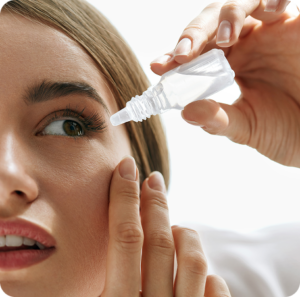
Common Symptoms of Dry Eye Disease
Dry eye looks and feels different from person to person. You might experience one or several of the following:
- Persistent stinging or burning sensation
- Gritty or sandy feeling in the eyes
- Blurry vision that clears with blinking
- Redness or eye fatigue
- Sensitivity to light or wind
Watery eyes can also be a sign of dry eye. When the surface becomes too dry, the eye reflexively floods with tears as a protective response. These reflex tears are of poor quality and do not solve the underlying problem.


Dry Eye Risk Factors
Dry eye has many contributing factors. Understanding yours is the first step toward effective treatment.
Common Risk Factors and Contributing Causes:
- Age:
Tear production naturally declines as we get older, making dry eye more common after age 50. - Screen time:
When we stare at digital screens, we blink less often, which accelerates tear evaporation. - Contact lens wear:
Lenses can disrupt tear film stability and increase surface irritation. - Medications:
Antihistamines, antidepressants, blood pressure medications, and hormone therapy can all reduce tear production. - Hormonal changes:
Women going through menopause are particularly susceptible to dry eye disease. - Environment:
Air conditioning, heating, low humidity, and smoke all accelerate tear evaporation. - Previous eye surgery:
LASIK and cataract surgery can temporarily affect corneal sensation and tear production. - Autoimmune conditions:
Conditions like Sjogren syndrome, rheumatoid arthritis, and lupus are closely linked to severe dry eye.
Book your appointment today.
If you’re due for a routine eye exam or exploring advanced treatment options, our team is here to make the process simple and stress-free. We combine personalized care with modern technology to ensure you feel confident in your vision and your experience.
Your vision deserves expert care, let’s take the next step together.
Book NowDiagnosing Dry Eyes
An accurate diagnosis is essential for patients struggling with dry eye because dry eye treatment must be matched to the specific underlying cause. During your evaluation at DiGaetano Cataract Services, we take time to listen to your symptoms before performing a series of gentle, non-invasive tests.
These may include measuring your tear volume, examining the quality of your tear film under magnification, assessing the function of your meibomian glands, and evaluating the health of your corneal surface. Together, these tests can give us a complete picture of your tear health so we can recommend the most appropriate treatment path.
Learn more about your eye eyecare with our blogs.
Explore our collection of expert-led articles to better understand your diagnosis, prepare for upcoming procedures, and stay updated on the innovations shaping the future of eyecare. We invite you to delve into our professional insights and take an active role in preserving your most precious sense.
Read Our Blogs
How Cataracts Gradually Affect Vision and What You Can Do
Cataracts are a very common part of the aging process and one of the most treatable causes of vision loss. In most cases, cataracts do not appear suddenly. Instead, they develop slowly over time, often making it difficult to recognize how much vision has changed until daily activities become more challenging. At DiGaetano Cataract Services, […]
Read more
Learn more about your eye eyecare with our blogs.
Explore our collection of expert-led articles to better understand your diagnosis, prepare for upcoming procedures, and stay updated on the innovations shaping the future of eyecare. We invite you to delve into our professional insights and take an active role in preserving your most precious sense.
Read Our Blogs
How Cataracts Gradually Affect Vision and What You Can Do
Cataracts are a very common part of the aging process and one of the most treatable causes of vision loss. In most cases, cataracts do not appear suddenly. Instead, they develop slowly over time, often making it difficult to recognize how much vision has changed until daily activities become more challenging. At DiGaetano Cataract Services, […]
Read moreMedical Treatment Options for Dry Eye
There is no single solution for every patient. Our goal is to layer treatments strategically, starting with the simplest options and escalating when needed.
Artificial Tears and Lubricating Eye Drops
For mild to moderate dry eye, high-quality lubricating drops are often the first line of treatment. We recommend preservative-free formulas, which are gentler on the eye surface and suitable for frequent use throughout the day.
Prescription Anti-Inflammatory Eye Drops
Inflammation can play a central role in dry eye disease. Prescription drops such as cyclosporine (Restasis) and lifitegrast (Xiidra) work by reducing inflammation on the ocular surface, helping your eyes produce healthier, more stable tears over time.
Meibomian Gland Treatment
Because meibomian gland dysfunction is one of the most common causes of evaporative dry eye, treating the eyelid margins directly is often highly effective. Warm compresses and prescription eyelid cleansers, and in-office lid treatments can restore proper gland function and dramatically improve tear quality.
Punctal Plugs for Tear Conservation
Punctal plugs are tiny, dissolvable or semi-permanent inserts placed painlessly into the small drainage canals at the inner corner of your eyelids. By slowing tear drainage, they help your natural tears stay on the eye surface longer. This is a quick, comfortable in-office procedure with no downtime.
When to Seek Professional Care for Dry Eyes
While mild dryness occasionally happens to everyone, it is time to see a specialist if you experience any of the following on a regular basis:
- Symptoms lasting more than a few days
- Blurry vision affecting daily tasks
- Eye drops no longer provide relief
- Discomfort during or after screen use
- Pain, discharge, or light sensitivity
- Symptoms worsening over time
Early intervention protects the health of your corneal surface and leads to better, faster outcomes.
Schedule a Consultation
You have lived with dry, irritated eyes long enough. Our team at DiGaetano Cataract Services is ready to help you find real, lasting comfort with a treatment plan built around your needs. To get started, schedule your dry eye evaluation today. We can’t wait to help you find the relief you deserve.
Frequently Asked Questions
Are over-the-counter artificial tears enough to treat my dry eyes?
Over-the-counter artificial tears can offer temporary relief for mild symptoms, but they do not address the underlying cause of dry eye. If you find yourself using drops multiple times a day without sustained improvement, it is a strong sign that a more targeted medical treatment plan is needed.
How long does it take to see results from dry eye treatment?
It depends on the treatment. Some interventions, like punctal plugs or better lubricating drops, can bring noticeable comfort within days. Prescription anti-inflammatory drops typically take 3 to 6 months to reach their full effect because they work by gradually calming inflammation and restoring natural tear production.
Is dry eye disease permanent? Can it be cured?
Dry eye disease is typically a chronic condition, meaning it requires ongoing management rather than a one-time cure. However, this does not mean you have to live with significant discomfort. The vast majority of patients who follow a consistent, well-designed treatment plan experience dramatic reductions in symptoms and enjoy a much better quality of life.
Can dry eyes affect my vision or the outcome of cataract surgery?
Yes, on both counts. An unstable tear film causes fluctuating, blurry vision and can make daily tasks harder than they need to be. It also directly affects the accuracy of the measurements taken before cataract surgery, which means untreated dry eye can compromise your surgical outcome. At DiGaetano Cataract Services, we assess and treat dry eye as part of our pre-surgical process to ensure you get the best possible vision results from your procedure.
What should I expect at my first dry eye appointment?
We’ll begin by listening carefully to your symptoms and medical history, then perform a series of gentle, painless tests to evaluate your tear film, gland function, and corneal surface. By the end of your visit, you will have a clear diagnosis and a personalized treatment plan.

