
Our team is experienced in retina disease monitoring, helping patients across every stage of care feel supported, informed, and confident. Whether you have recently received a diagnosis or simply want to stay ahead of any changes in your eye health, we are here for you.
What Is Retina Disease Monitoring?
Retina disease monitoring is a process of regular, careful observation of the retina to track any changes over time. Conditions like age-related macular degeneration (AMD), diabetic retinopathy, retinal tears, and macular holes can develop slowly, often without obvious symptoms in the early stages. Catching these changes early with retina disease monitoring is one of the most powerful ways to protect your sight.
Think of it like a series of detailed check-ins for your eyes. Each visit gives your care team a clearer picture of how your retina is doing and whether any treatment or adjustment in your care plan is needed.
Common Retinal Conditions We Monitor
Our team at DiGaetano Cataract Services routinely monitors or detects a range of retinal conditions, including:
- Age-related macular degeneration (AMD):
A condition that affects the central part of your vision, often related to aging. - Diabetic retinopathy:
Damage to the blood vessels in the retina caused by long-term high blood sugar levels - Retinal tears and detachments:
When the retina begins to pull away from the back of the eye, requiring prompt attention - Macular holes:
A small break in the macula, the part of the retina responsible for sharp, central vision - Epiretinal membrane:
A thin layer of scar tissue that forms over the macula and can cause visual distortion] - Hypertensive retinopathy:
Changes in the retina caused by high blood pressure


What to Expect During a Retina Monitoring Appointment
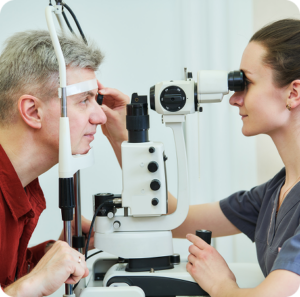
We know that medical appointments can feel daunting. Our goal is here to make your experience as comfortable and stress-free as possible. Here is what a typical retina monitoring visit at DiGaetano Cataract Services looks like:
Comprehensive Eye Examination
Your appointment will begin with a thorough review of your medical history and any changes you may have noticed in your vision. Your doctor will examine your eyes using specialized instruments to get a detailed look at the retina and surrounding structures.
Advanced Retinal Imaging
We use state-of-the-art imaging technology, including optical coherence tomography (OCT), which creates highly detailed cross-sectional images of the retina. This painless, non-invasive scan takes just a few minutes and gives our team an incredibly precise view of the layers of your retina, helping us detect even subtle changes before they affect your vision.
Dilated Eye Exam
In many cases, we will use dilating eye drops to widen your pupils, allowing a broader and clearer view of the retina. Your vision may be slightly blurry or sensitive to light for a few hours afterward, so we recommend arranging transportation home.
Why Regular Retina Monitoring Makes a Difference
Many retinal conditions progress gradually and silently. By the time noticeable symptoms appear, significant damage may have already occurred. Regular monitoring allows us to:
- Identify changes in the retina before vision loss begins
- Provide peace of mind by confirming when things are stable
- Coordinate care with your primary physician or diabetes specialist when needed
- When Should You Schedule a Retina Monitoring Appointment?
You should contact DiGaetano Cataract Services promptly if you experience any of the following:
Intervention and care are still possible, we are here to help you navigate if you notice these symptoms:
- Sudden or gradual blurring of your central vision
- Floaters (spots or strings drifting across your field of view) or flashes of light
- A shadow or dark curtain appearing in part of your visual field
- Distortion of straight lines, such as doorframes appearing wavy
- Difficulty reading or recognizing faces
- Any sudden change in your vision, even if it seems minor
Even if you have no symptoms, we encourage anyone with diabetes, a family history of macular degeneration, high blood pressure, or a previous retinal condition to schedule regular monitoring appointments as part of their ongoing eye health routine.
Book your appointment today.
If you’re due for a routine eye exam or exploring advanced treatment options, our team is here to make the process simple and stress-free. We combine personalized care with modern technology to ensure you feel confident in your vision and your experience.
Your vision deserves expert care, let’s take the next step together.
Book NowSchedule Your Consultation
Your vision is precious and protecting it starts with staying proactive. At DiGaetano Cataract Services, our compassionate team is ready to provide the expert retina disease monitoring you need with the personal, attentive care you deserve.
Do not wait for symptoms to appear. Early monitoring is the best investment you can make in your long-term eye health.
Call us today or visit our website to request your appointment. Our team looks forward to partnering with you on your journey to clearer, healthier vision.
Frequently Asked Questions About Retina Disease Monitoring
How often do I need retina monitoring appointments?
The frequency of your visits depends on your individual diagnosis and the stability of your condition. Some patients require monitoring every few months, while others with stable conditions may only need annual check-ins. Your doctor at DiGaetano Cataract Services will create a personalized monitoring schedule based on your specific needs.
Is retina monitoring painful or uncomfortable?
Retina monitoring is a non-invasive and generally very comfortable process. The imaging scans we use, such as OCT, are completely painless. Dilating eye drops may cause temporary light sensitivity and mild blurring, but these effects wear off within a few hours. Our team will do everything possible to ensure you feel at ease throughout your visit.
Can retinal diseases be treated if caught early?
In many cases, yes. Early detection significantly improves treatment outcomes. Conditions like wet AMD and diabetic retinopathy can be managed effectively with timely intervention, which may include medications delivered as eye injections, laser treatments, or other procedures. The sooner changes are identified, the more options you have to protect your vision.
What is the difference between a regular eye exam and retina monitoring?
A routine eye exam checks for common vision problems like nearsightedness, farsightedness, and eye pressure. Retina monitoring is a more focused and specialized process that uses advanced imaging technology to closely track the health of the retina over time. It is specifically designed to detect and follow conditions that affect the back of the eye.
Does insurance cover retina monitoring?
Many insurance plans cover medically necessary retina monitoring appointments. That said, coverage can vary depending on your plan and diagnosis. Our front office team is happy to help you understand your benefits and navigate the process before your appointment. Simply give us a call, and we will be glad to assist.
Learn more about your eye eyecare with our blogs.
Explore our collection of expert-led articles to better understand your diagnosis, prepare for upcoming procedures, and stay updated on the innovations shaping the future of eyecare. We invite you to delve into our professional insights and take an active role in preserving your most precious sense.
Read Our Blogs
How Cataracts Gradually Affect Vision and What You Can Do
Cataracts are a very common part of the aging process and one of the most treatable causes of vision loss. In most cases, cataracts do not appear suddenly. Instead, they develop slowly over time, often making it difficult to recognize how much vision has changed until daily activities become more challenging. At DiGaetano Cataract Services, […]
Read more
